 moneymake.co.uk – Smart Business & Trend Insights
 moneymake.co.uk – Smart Business & Trend Insights
Microsoft is reportedly exploring a return to the foldable device market, despite the lukewarm reception of its Surface Duo smartphone series. A recently unearthed patent application suggests the tech giant is developing a new foldable device concept with a focus on durability and design refinement.
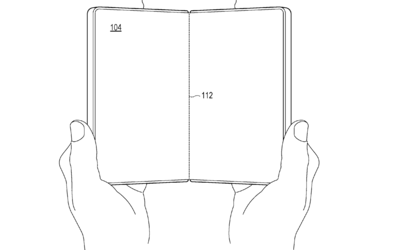
The patent, filed with the United States Patent and Trademark Office on February 29, details a foldable smartphone design featuring a unique single-hinge mechanism dubbed the "spine cover plate." This innovation aims to address some of the common issues associated with foldable devices, such as hinge durability and the visibility of the crease on the display.
The patent application indicates that the device would adopt a book-style design reminiscent of the Samsung Galaxy Z Fold series, utilizing a flexible display. The core of the innovation lies in the "spine cover plate," which is designed to protect the single-hinge system by acting as a protective shield for the structural elements.
The key differentiator between existing hinge designs and Microsoft's proposed solution is the spine cover's ability to automatically adjust during the opening and closing of the device. This dynamic adjustment aims to eliminate unnecessary gaps around the hinge, offering improved protection against dust and water ingress. Currently, even Samsung's foldable devices only offer an IPX8 rating, providing water resistance but not complete waterproofing.
Microsoft's patent also suggests that the new hinge mechanism could significantly reduce the visibility of the hinge crease, a common aesthetic concern among foldable phone users. Furthermore, the design incorporates techniques to minimize the overall thickness of the device when folded.
According to the patent, the spine cover plate retracts towards the central spine as the device is folded, effectively reducing the width of the folded device. This design consideration aims to improve the ergonomics and usability of the device, making it easier to handle with one hand.
While the concept is intriguing, the practicality of adding another movable part to the already complex foldable mechanism remains a question. The industry is actively searching for solutions to eliminate the foldable crease, and while some manufacturers have implemented water-drop folding mechanisms to mitigate the issue, a truly crease-free foldable device has yet to emerge.
Moreover, the durability of foldable devices is a significant concern, given the numerous moving parts involved. Whether the added layer of complexity introduced by the spine cover plate ultimately enhances or detracts from the device's overall reliability remains to be seen.
Newer articles
Older articles

 R Ashwin announces 'new beginning' in IPL career; quits CSK
 Ravichandran Ashwin retires from IPL
 Pressure and Promise: Bengaluru Bulls coach BC Ramesh lays out bold PKL 12 vision
R Ashwin brings curtain down on 'my time as an IPL cricketer'
Pressure and Promise: Bengaluru Bulls coach BC Ramesh lays out bold PKL 12 vision
R Ashwin brings curtain down on 'my time as an IPL cricketer'
 Cox, Jacks put Invincibles on course for a direct entry to final
 R Ashwin Announces IPL Retirement Amid Trade Speculation, Eyes Global T20 Leagues
 Onion juice for hair growth: How to extract it, apply it and why Bollywood divas swear by it
 Vijay Shankar set for Tripura switch
 O'Rourke, Phillips & Allen ruled out of Australia series; Santner set for surgery
 Hill destinations in Himachal Pradesh to avoid travelling to right now